

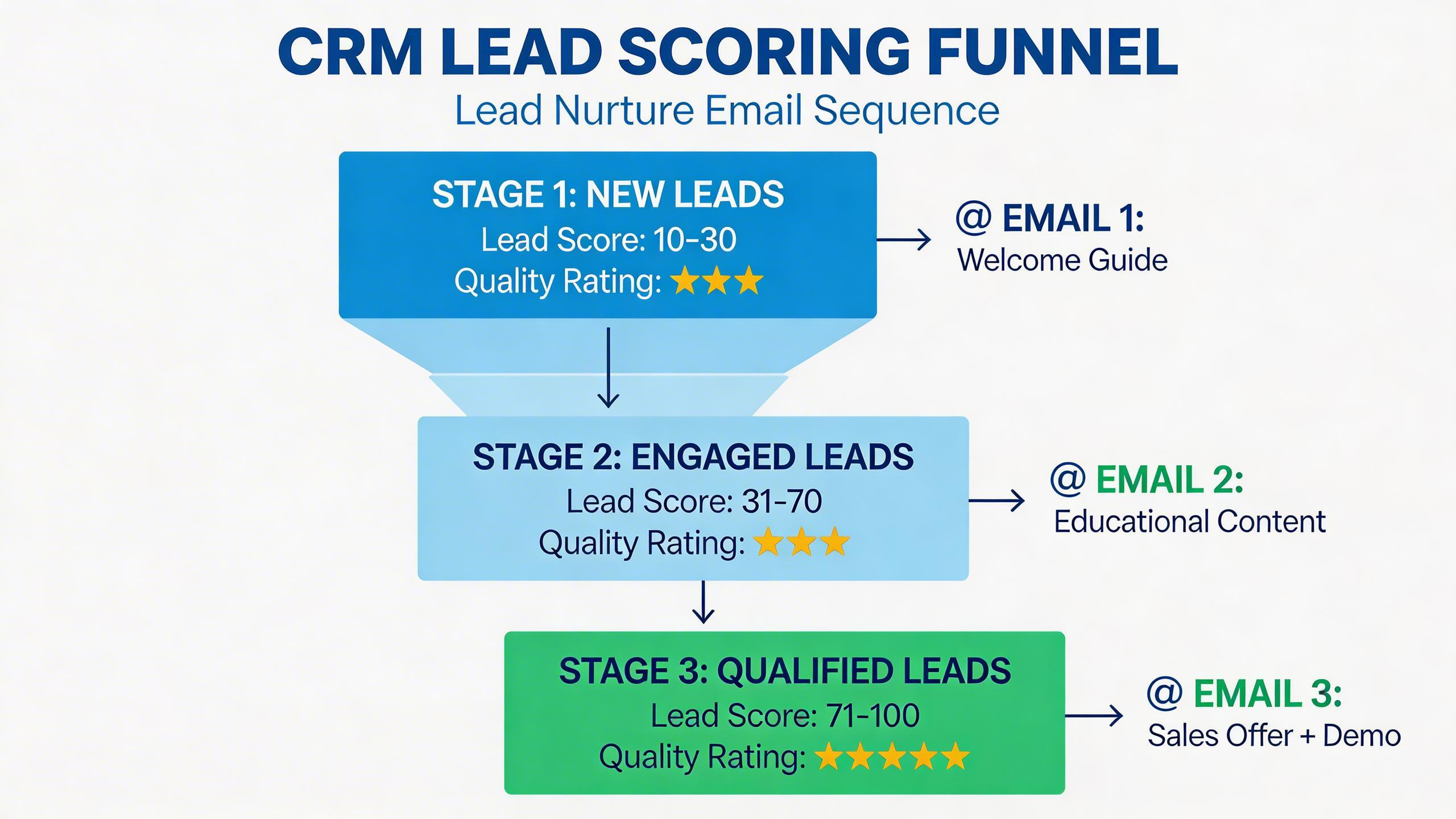
The CPL Trap: Why Cheap Leads Are Killing Your Pipeline
Every Meta Ads manager has been there. Your campaign dashboard looks phenomenal: cost per lead is down 40%, lead volume is up, and your weekly report practically writes itself. Then sales calls you into a meeting. “These leads are garbage. Nobody picks up the phone, and the ones who do have no budget, no authority, and no timeline.”
This is the CPL trap, and it is the single most expensive mistake in B2B Meta advertising in 2026. Optimizing for the lowest possible cost per lead without measuring what happens after the form submission creates a pipeline illusion. You generate hundreds of Marketing Qualified Leads (MQLs) that never convert into Sales Qualified Leads (SQLs), wasting both ad spend and sales capacity.
The data backs this up. According to Forrester’s 2025 B2B Marketing Benchmark, only 27% of leads generated through paid social ever receive a follow-up beyond an initial autoresponder. Of those that do get follow-up, fewer than 12% progress to SQL status. The problem is not lead generation. The problem is what happens in the 24 to 72 hours after someone clicks your ad.
Companies that implement structured lead quality scoring and post-click nurture funnels generate 50% more SQLs at 33% lower cost per SQL. This article breaks down exactly how to build that system using Meta Ads, CAPI, and automated nurture sequences.
Understanding Lead Quality Scoring for Meta Ads
Lead quality scoring is a systematic method for assigning numerical values to each lead based on demographic fit, behavioral signals, and engagement depth. Unlike traditional lead scoring that relies solely on CRM activity, Meta Ads lead quality scoring incorporates pre-click and post-click signals to evaluate intent before a sales rep ever makes contact.
The Three Pillars of Lead Quality Scoring
Pillar 1: Demographic Fit (0-30 points)
Demographic scoring evaluates whether the lead matches your ideal customer profile (ICP). For B2B campaigns, this typically includes:
- Job title seniority: C-suite or VP = 25-30 points, Director = 20 points, Manager = 15 points, Individual contributor = 5-10 points
- Company size: Enterprise (1000+ employees) = 30 points, Mid-market (200-999) = 25 points, SMB (50-199) = 15 points, Micro (<50) = 5 points
- Industry vertical: Primary target industry = 30 points, Adjacent industry = 20 points, Non-target = 5 points
- Geographic location: Tier 1 market = 25 points, Tier 2 = 15 points, Outside target region = 5 points
Pillar 2: Behavioral Engagement (0-40 points)
Behavioral scoring tracks what a lead does after clicking your ad. This is where most teams fail because they stop tracking at form submission. Effective behavioral scoring includes:
- Content consumption depth: Read full whitepaper or case study = 30-40 points, Skimmed landing page only = 5 points, Bounced after form = 0 points
- Multi-touch engagement: Clicked on 3+ ads or pieces of content = 35 points, Returned to website organically after initial ad click = 40 points, Single touch only = 10 points
- Email engagement: Opened 3+ nurture emails = 30 points, Clicked through to resource = 35 points, Unsubscribed = -20 points
- Website behavior: Visited pricing page = 40 points, Viewed product demo = 35 points, Browsed careers page only = -10 points
Pillar 3: Intent Signals (0-30 points)
Intent scoring captures buying signals that indicate a lead is actively evaluating solutions:
- Demo or consultation request: 30 points
- Pricing page visit with time on page > 60 seconds: 25 points
- Competitor comparison page view: 20 points
- Re-engagement after 7+ days of inactivity: 15 points
- Social proof engagement (case study downloads): 20 points
A lead scoring between 70 and 100 is ready for immediate sales outreach. Leads scoring 40 to 69 need nurture sequences. Leads below 40 should be recycled into awareness campaigns or deprioritized.
Integrating CAPI for Offline Conversion Data
Meta’s Conversions API (CAPI) is the backbone of any serious lead quality scoring system. While the Meta Pixel tracks browser-based events, CAPI lets you send server-side events directly from your CRM, marketing automation platform, or data warehouse. This is critical because the highest-value conversion events, such as SQL qualification, opportunity creation, and closed-won deals, happen offline.
Setting Up CAPI for Lead Quality Feedback
Step 1: Define your offline conversion events. At minimum, configure these custom events in your Meta Events Manager:
Lead_Qualified— fired when a lead meets your MQL threshold scoreSQL_Created— fired when sales accepts and qualifies the leadOpportunity_Created— fired when a deal enters your pipelineDeal_Closed_Won— fired when revenue is recognized
Step 2: Map your CRM stages to CAPI events. Use your CRM’s webhook or API capabilities to fire CAPI events whenever a lead progresses through your pipeline. In Salesforce, this means creating a Process Builder or Flow that triggers on Lead Status or Opportunity Stage changes. In HubSpot, use workflow-based webhook actions.
Step 3: Include value parameters. Every CAPI event should include the estimated deal value. This allows Meta’s algorithm to optimize not just for lead volume but for lead value. A campaign generating 50 leads worth $500 each is fundamentally different from one generating 50 leads worth $50,000 each, and CAPI lets Meta’s machine learning understand that difference.
Step 4: Set up a feedback loop with a 7-day and 30-day lag. Lead quality data takes time to materialize. Configure automated CAPI pushes at 7 days (for MQL qualification) and 30 days (for SQL conversion) after initial lead capture. This delayed feedback gives Meta’s algorithm the signal density it needs to optimize for downstream value.
Teams implementing CAPI-based offline conversion tracking typically see a 25-35% improvement in SQL rates within 60 days, because Meta’s delivery algorithm begins favoring users who resemble your best customers rather than users who are simply most likely to fill out a form.
Building Automated Post-Click Nurture Sequences
The 24 hours immediately following a Meta Ads form submission are the most critical window in your entire funnel. Research from InsideSales.com shows that responding to a lead within 5 minutes makes you 21 times more likely to qualify that lead compared to responding after 30 minutes. Yet the average B2B response time is 42 hours.
An automated post-click nurture funnel eliminates this gap. Here is how to structure one across email, SMS, and WhatsApp.
The First 24 Hours: Speed-to-Lead Sequence
Minute 0-5: Instant acknowledgment (Email + SMS)
Trigger an immediate email confirming receipt of their request, including the specific resource they requested or a summary of their inquiry. Simultaneously send an SMS: “Hi [First Name], thanks for requesting [resource]. We’ll be in touch within 24 hours. In the meantime, here’s a quick case study: [link].” This dual-channel approach achieves 95%+ visibility because even if the email lands in Promotions, the SMS reaches them directly.
Hour 1-4: Personalized value delivery (Email)
Send a personalized email based on the lead’s source campaign. If they came from a campaign targeting CFOs interested in cost reduction, send a CFO-specific ROI calculator or case study. If they came from a campaign targeting marketing directors, send a campaign performance benchmark report. Dynamic content based on UTM parameters or ad set ID makes this achievable at scale.
Hour 6-12: Social proof touchpoint (WhatsApp or SMS)

If the lead provided a phone number and opted into messaging, send a WhatsApp message with a short customer testimonial video or a one-paragraph success story relevant to their industry. WhatsApp messages achieve 98% open rates in most markets, making this the highest-impact touchpoint in your entire sequence.
Hour 18-24: Direct outreach trigger (Email + CRM task)
For leads scoring above 60 points at this stage, trigger a personal email from the assigned sales rep and create a CRM task for phone follow-up. For leads scoring 40-59, send an educational email with a soft call-to-action. For leads below 40, continue the automated nurture track.
Days 2-7: Deepening Engagement
Day 2: Educational content (Email)
Send a blog post, guide, or video that addresses the primary pain point associated with their ad campaign. Include a secondary CTA inviting them to a webinar or live demo.
Day 3-4: Behavioral trigger check
If the lead has opened 2+ emails and clicked at least one link, escalate their score by 15 points and trigger a sales notification. If they have not engaged, switch to a different content angle or channel.
Day 5: Objection handling (Email)
Send content that preemptively addresses common objections: pricing concerns, implementation timeline, competitive comparisons, or integration complexity. This is the email that separates professional nurture sequences from amateur drip campaigns.
Day 7: Decision-stage offer (Email + SMS)
Present a compelling next step: free consultation, custom audit, pilot program, or limited-time offer. This is your conversion event for the first-week nurture cycle. Leads who take action here are your highest-probability SQLs.
Days 8-30: Extended Nurture for Slower Buyers
Not every lead converts in the first week. For leads that remain engaged but have not requested a conversation, implement a bi-weekly cadence with:
- Industry reports and original research
- Customer success stories with measurable outcomes
- Product updates and feature announcements
- Invitations to webinars, workshops, or events
- Re-engagement offers after 14 days of inactivity
Each touchpoint should update the lead’s score in real time. A lead who downloads three resources, watches a demo video, and visits your pricing page twice in 30 days is a fundamentally different prospect than one who opened a single email, even if both originated from the same Meta campaign.
Scoring Leads Within 24 Hours: A Practical Framework
Speed matters. The faster you score a lead, the faster you can route them to the right nurture track or sales rep. Here is a practical scoring workflow that operates within 24 hours of lead capture:
Hour 0: Initial demographic score. As soon as the lead submits a form, your CRM or marketing automation platform should assign a demographic score based on the form fields provided. If you are using Meta Lead Ads, this data comes directly from the lead form. If you are driving traffic to a landing page, enrich the data using tools like Clearbit, ZoomInfo, or Apollo.
Hour 0-1: First behavioral score. Track whether the lead visited additional pages after form submission, downloaded a resource, or watched an embedded video. Assign initial behavioral points.
Hour 1-6: Engagement response score. Did they open the confirmation email? Click through to the resource? Reply to the SMS? Each positive engagement adds 5-10 points. Non-engagement is not penalized yet at this stage.
Hour 6-24: Multi-channel response score. Aggregate engagement across email, SMS, WhatsApp, and website visits. A lead engaging across multiple channels within 24 hours typically scores 20-30 points higher than single-channel engagers and converts to SQL at 3x the rate.
Hour 24: Routing decision. Based on the cumulative 24-hour score:
- Score 70+: Immediate sales handoff with full context. Sales should contact within 2 hours.
- Score 40-69: Enter 7-day accelerated nurture sequence. Re-evaluate at Day 7.
- Score 20-39: Enter 30-day standard nurture. Re-evaluate monthly.
- Score <20: Add to long-term awareness list. Do not allocate sales resources.
MQL to SQL Pipeline Metrics You Must Track
Without measurement, your lead quality scoring system is just guesswork. These are the pipeline metrics that connect your Meta Ads spend to actual revenue:
MQL-to-SQL Conversion Rate: The percentage of MQLs that become SQLs. Benchmark: 25-35% for well-optimized funnels. If you are below 15%, your scoring thresholds are too low or your nurture sequences are ineffective.
Speed to SQL: The average number of days from MQL to SQL. Benchmark: 7-14 days for mid-market B2B. If this exceeds 30 days, your nurture is not creating urgency or your ICP targeting needs refinement.
Cost per SQL (CPSQL): Total Meta Ads spend divided by number of SQLs generated. This is the metric that replaces CPL as your primary efficiency KPI. A $200 CPL that produces SQLs at $800 CPSQL is vastly superior to a $50 CPL that produces SQLs at $2,000 CPSQL.
Nurture Engagement Rate: The percentage of MQLs that engage with at least 3 touchpoints in your nurture sequence. Benchmark: 40-55%. Below 30% indicates content-market fit problems or channel selection issues.
Lead Score Accuracy: Retrospectively measure whether your score predicted SQL conversion. Take all leads scored 70+ and check what percentage became SQLs. If accuracy is below 50%, recalibrate your scoring model quarterly.
Pipeline Velocity: Revenue in pipeline multiplied by win rate, divided by average sales cycle length. This metric connects your lead quality scoring directly to revenue acceleration.
CAPI Signal Match Rate: The percentage of your offline conversion events that Meta successfully matches back to ad interactions. Benchmark: 70%+. Below 50% means your data quality (email hashing, phone number formatting) needs improvement.
Putting It All Together: The 90-Day Implementation Roadmap
Days 1-14: Foundation. Audit your current Meta Ads campaigns and identify which campaigns are generating the highest volume of leads but the lowest SQL conversion. Set up CAPI with your four core offline events. Define your scoring criteria based on historical closed-won deal data.
Days 15-30: Automation. Build your first 7-day nurture sequence across email and one additional channel (SMS or WhatsApp). Implement real-time lead scoring in your marketing automation platform. Create routing rules based on score thresholds.
Days 31-60: Optimization. Analyze first-month data. Which nurture touchpoints drive the most score increases? Which campaigns produce the highest-scoring leads? Adjust your Meta Ads targeting to favor audiences that resemble your highest-scoring leads. Refine scoring weights based on actual SQL conversion data.
Days 61-90: Scale. Expand nurture sequences to include Days 8-30 content. Implement advanced CAPI value optimization. Build custom audiences based on lead scores for retargeting. Create lookalike audiences from your SQLs rather than your MQLs.
By the end of 90 days, you will have a system that generates fewer but dramatically better leads, nurtures them through a structured multi-channel sequence, scores them in real time, and feeds conversion quality data back to Meta for continuous algorithmic improvement.
The Bottom Line
The era of celebrating low CPL is over. In 2026, the teams winning with Meta Ads are the ones measuring what happens after the click: scoring leads within 24 hours, nurturing them through personalized multi-channel sequences, and feeding offline conversion data back to Meta through CAPI. The companies doing this generate 50% more SQLs at 33% lower cost, not because they spend more, but because they convert more of what they already have.
Stop optimizing for form fills. Start optimizing for revenue.
Stop losing conversions after the click.
DeepClick helps Meta advertisers fix post-click drop-offs and improve CVR by 30%+ through automated re-engagement and post-click link optimization.
发表回复