
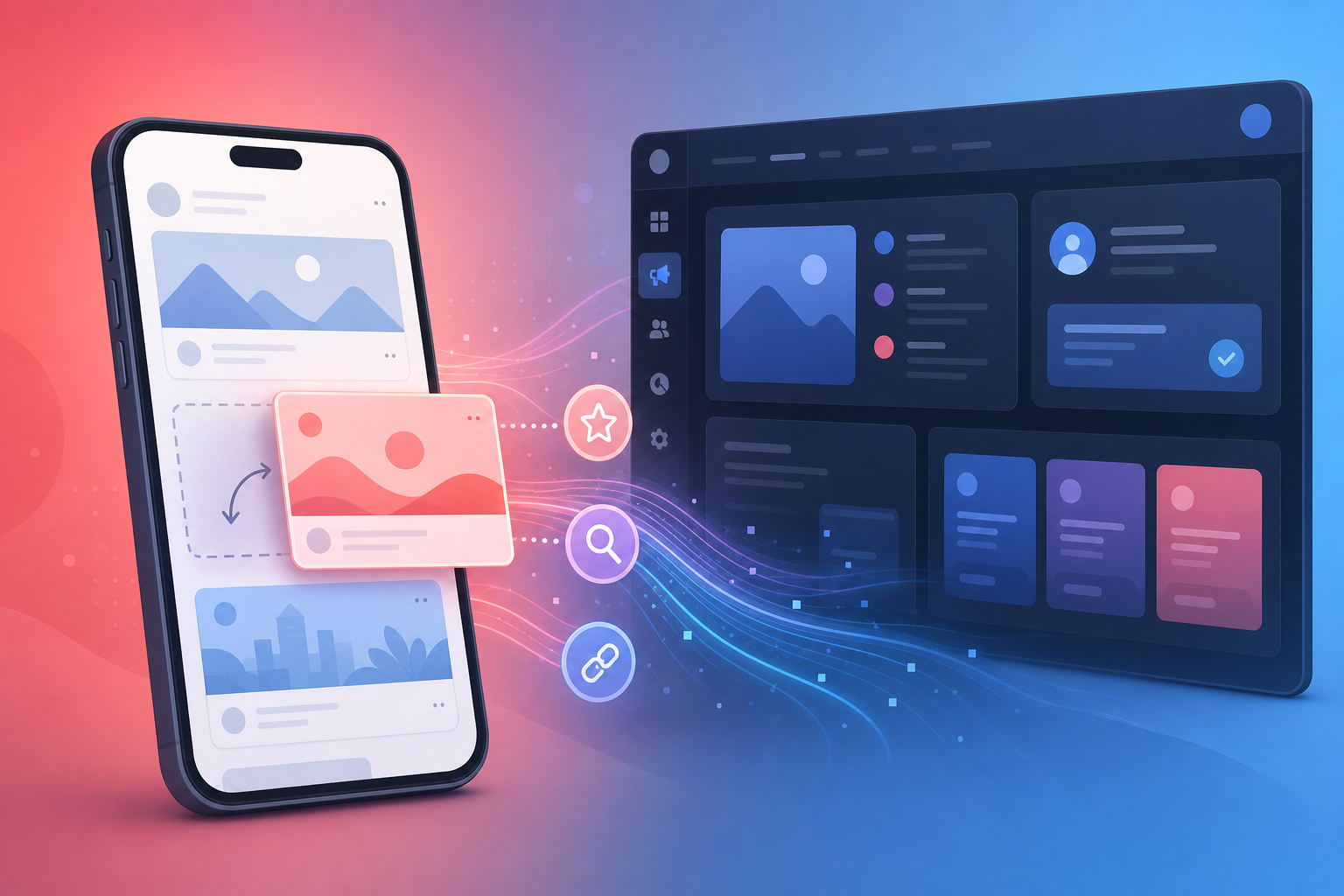
If you run Google Ads campaigns for app installs, TikTok’s 2026 algorithm overhaul should be on your radar — even if you never spend a dollar on TikTok itself. The platform’s decisive shift toward SEO-first content discovery is reshaping user behavior across every channel, changing what audiences expect from ads, landing pages, and install flows. For teams running UAC and PMAX campaigns with PWA destinations, this is both a disruption and an opportunity. Users trained by TikTok’s search-driven interface now arrive at your Google Ads touchpoints with different intent signals, higher expectations for relevance, and shorter patience for friction. Understanding this shift is essential to keeping your install costs down and your conversion rates up.
→ Want to bypass Google Play entirely? See how ROiBest PWA works — no submission, no cut, 1.2x installs.
TikTok’s SEO-First Shift: What Changed and Why It Matters for Google Ads Teams
TikTok in 2026 is no longer just an entertainment feed powered by watch-time signals. The platform has fundamentally restructured its algorithm around search intent and keyword relevance — a move the industry is calling the “SEO-first era.” Here is what actually changed and why Google Ads buying teams need to pay attention.
The Algorithm Now Prioritizes Search Discoverability
Previously, TikTok’s For You Page was driven almost entirely by engagement metrics: likes, shares, completion rate, and re-watches. In 2026, keyword relevance in captions, on-screen text (scanned via OCR), and even spoken audio transcription have become first-class ranking signals. Videos that include target keywords in the first 150 characters of captions and mention them within the first few seconds of audio see a 20–40% visibility boost in both search results and the algorithmic feed.
This means TikTok is no longer a passive discovery engine. It is an active search platform, and 64% of Gen Z users now search on TikTok the same way they would on Google — typing queries like “best budget app for X” or “how to do Y on Android.”
Completion Rate Thresholds Have Increased
The bar for algorithmic amplification has risen sharply. In 2024, a 50% completion rate was sufficient for broader distribution. In 2026, you need 70%+ completion to trigger viral distribution mechanics. This pushes all content — organic and paid — toward shorter, more focused, and more intent-aligned formats. The ripple effect hits Google Ads because user expectations for relevance and speed are being set by TikTok’s standards.
Follower-First Distribution Changes the Funnel
TikTok now shows new content to existing followers first before testing it with broader audiences. Only content that generates strong engagement velocity in the first hour earns wider distribution. This follower-first model means brands building audiences on TikTok are creating highly engaged user pools — and those same users show up in your Google Ads audiences with different behavioral patterns than users from two years ago.
Why This Matters Even If You Don’t Advertise on TikTok
The critical insight for Google Ads teams is this: TikTok’s algorithm changes don’t stay on TikTok. Research shows that TikTok influences 35% more conversions than last-click attribution reveals, and it assists roughly 42% of Google conversions. Users who discover a product concept on TikTok frequently complete their journey through a Google search or a Google Ads click. When TikTok shifts to SEO-first content, the users arriving at your Google Ads touchpoints carry different expectations — they have already done research, they know what they want, and they expect a frictionless path to install.
Cross-Platform Impact: How TikTok Changes Affect UAC/PMAX Campaign Strategy

The TikTok algorithm update doesn’t exist in a vacuum. Between 30% and 55% of medium-to-large advertisers now run campaigns across Google, Meta, and TikTok simultaneously. When one platform shifts its discovery mechanics, the entire cross-platform ecosystem adjusts. Here is how TikTok’s SEO-first pivot specifically impacts your UAC and PMAX campaigns.
User Intent Signals Are Sharper — Your Campaigns Need to Match
Users trained by TikTok’s search-first experience arrive at Google Ads touchpoints with more refined intent. They are not browsing aimlessly — they have already seen content about your category, formed opinions, and are looking for specific solutions. This changes how Smart Bidding should evaluate user quality. If your campaigns still optimize for broad install volume without incorporating Smart Bidding value signals for PWA campaigns, you are likely overpaying for low-intent users while missing the high-value ones that TikTok’s algorithm has pre-qualified.
Creative Fatigue Cycles Are Accelerating
TikTok’s new algorithm rewards creative volume — advertisers are advised to test 10 to 20 creatives per campaign. This velocity norm is bleeding into Google Ads. PMAX campaigns that rely on a small set of static assets are underperforming compared to those with regularly refreshed creative libraries. The lesson from TikTok’s shift: your Google Ads creative strategy needs to match the pace that users now expect. Stale creatives don’t just hurt CTR; they signal to Google’s algorithm that your campaign is losing relevance.
Attribution Windows Need Recalibration
With TikTok functioning as an upper-funnel discovery engine that feeds mid-funnel Google searches, your attribution model must account for cross-platform assist paths. Google Ads now supports direct import of campaign data from TikTok and other platforms for unified performance analysis. If you are not leveraging this, you are almost certainly misattributing conversions and making bidding decisions based on incomplete data. This is especially critical for PWA install campaigns, where the PWA tracking advantage for ad measurement gives you cleaner first-party data than native app installs that lose signal through app store intermediaries.
PMAX and Demand Gen Roles Are Shifting
Google’s own campaign architecture is responding to TikTok’s competitive pressure. Demand Gen campaigns — designed to reach users before they start searching — now directly compete with TikTok for upper-funnel attention. The practical implication: your PMAX campaigns should focus on conversion-optimized mid-to-bottom funnel work, while Demand Gen handles the awareness layer that TikTok’s algorithm changes have made more competitive. Teams that still run PMAX as a catch-all are leaving performance on the table.
PWA Landing Pages as the Bridge Between Platforms
Here is where the TikTok algorithm shift creates a concrete advantage for teams using PWA distribution instead of traditional Google Play listings. When users move between platforms — discovering on TikTok, clicking through on Google Ads — the landing page experience determines whether that cross-platform journey converts or drops.
Speed and Friction: The Post-TikTok User Expectation
TikTok’s SEO-first algorithm has trained users to expect instant relevance. They search, they find, they engage — all within seconds. When these users land on a Google Ads destination, they carry that expectation forward. A traditional Google Play listing introduces multiple friction points: store loading time, app size concerns, download waits, and installation processes. A PWA landing page eliminates every one of these barriers. The user clicks, the app loads instantly in the browser, and the “install” is a one-tap add to home screen. For cross-platform user journeys, this speed advantage is not marginal — it is the difference between a completed install and a bounced click.
First-Party Data Continuity Across Platforms
One of the biggest challenges in cross-platform advertising is maintaining data continuity. When a user discovers your app on TikTok and later clicks a Google Ad, the attribution chain typically breaks at the app store boundary. PWA destinations solve this by keeping the entire journey within the web ecosystem. Every touchpoint — from the initial ad click through to in-app events — generates first-party data that your Google Ads campaigns can use for Smart Bidding optimization. This is particularly powerful in 2026’s post-cookie landscape, where first-party data is the single most important competitive advantage for PMAX advertisers. Refer to our complete Google Ads PWA install campaign guide for the full framework on setting this up.
Creative-to-Landing Page Consistency
TikTok’s algorithm rewards content that matches search intent precisely. Google Ads quality scores work on the same principle. With PWA landing pages, you control the entire post-click experience — there is no app store listing sitting between your ad creative and the user’s first interaction with your product. This means you can align your landing page messaging exactly with the ad creative that drove the click, matching the intent-first expectations that TikTok’s algorithm has trained into your audience. The result is higher quality scores, lower CPCs, and better conversion rates across your Google Ads campaigns.
No Store Review Bottleneck for Rapid Iteration
TikTok’s creative velocity demands — 10 to 20 creatives per campaign — require equally fast iteration on landing experiences. PWA destinations can be updated instantly without waiting for Google Play review cycles. When you identify a winning creative angle in your Google Ads campaign, you can align your PWA landing page within hours, not days. This speed of iteration is essential in a market where TikTok’s algorithm changes are accelerating the pace at which user preferences shift.
Action Steps: Adapt Your Google Ads PWA Campaigns for the TikTok SEO-First Era
Based on the algorithm changes and cross-platform dynamics outlined above, here are concrete steps to adjust your Google Ads PWA campaigns.
1. Audit Your Keyword Strategy for Cross-Platform Intent
TikTok’s SEO-first shift means users are forming search habits on TikTok that carry over to Google. Review your Google Ads keyword targeting against trending TikTok search terms in your category. Tools like Google’s cross-channel performance reports — which now import TikTok data directly — can reveal which TikTok-originated queries are driving Google search volume. Update your UAC and PMAX asset groups to capture this cross-platform intent.
2. Increase Creative Refresh Frequency
Match the creative velocity that TikTok’s algorithm now demands. For PMAX campaigns, aim to refresh your asset library every two to three weeks instead of monthly. Prioritize short-form video assets that mirror the format users encounter on TikTok — 15 to 30 seconds, front-loaded value, clear call to action. Your PWA landing page should evolve in lockstep with your creative rotation to maintain message consistency and quality score.
3. Implement Value-Based Bidding with First-Party PWA Data
TikTok’s algorithm changes are sending more pre-qualified users into Google’s ecosystem. Capture this advantage by feeding richer conversion signals back to Google’s Smart Bidding. PWA destinations generate first-party event data — session depth, feature engagement, monetization events — that native app installs often lose in the app store handoff. Configure your campaigns to optimize for these downstream value signals, not just install volume.
4. Restructure Your Campaign Architecture
Align your Google Ads campaign structure with the new cross-platform reality:
- Demand Gen campaigns for upper-funnel awareness, directly competing with TikTok for discovery-stage users
- PMAX campaigns for conversion-optimized scaling with PWA install goals
- Search campaigns for capturing high-intent queries generated by TikTok-originated discovery
This layered approach ensures you capture users at every stage of the cross-platform journey.
5. Set Up Cross-Platform Attribution Reporting
Use Google Ads’ cross-channel import feature to unify your TikTok and Google performance data. Even if you do not run TikTok ads, understanding how TikTok organic content in your category drives Google search behavior is critical for bid optimization. PWA tracking makes this easier because the entire user journey — from ad click to install to first purchase — happens within the web and produces clean, attributable data.
Summary
TikTok’s 2026 SEO-first algorithm shift is not just a TikTok story — it is reshaping how users discover, evaluate, and install apps across every platform. For Google Ads buying teams running UAC and PMAX campaigns, this means adapting to sharper user intent signals, faster creative cycles, and more complex cross-platform attribution paths. PWA landing pages provide a structural advantage in this new environment: faster install experiences that match TikTok-trained expectations, first-party data continuity that strengthens Smart Bidding, and instant iteration speed that keeps pace with algorithm-driven market changes. The teams that adapt their Google Ads PWA campaigns to account for TikTok’s influence — even without spending on TikTok directly — will see measurably better install economics in the months ahead.
Skip the app store. Go live instantly, keep 100% of your revenue.
ROiBest helps Android app teams launch PWAs — no review process, no 30% Google Play cut, and push notifications that work even after uninstall. Teams see up to 1.2x higher install conversion rates vs native app downloads.
发表评论