

Meta’s recent enforcement wave — banning entire advertiser categories like law firms and tightening Advantage+ automated ad placement — is forcing performance advertisers to confront an uncomfortable truth: building your acquisition strategy on a single platform’s ad system is a liability. When Meta changes rules overnight, campaigns pause, CPAs spike, and growth stalls. The strategic response isn’t to fight platform dependency — it’s to diversify your install path. Google Ads combined with PWA distribution gives you a platform-independent conversion endpoint that no single ad network can shut down.
→ Want to bypass Google Play entirely? See how ROiBest PWA works — no submission, no cut, 1.2x installs.
What Happened: Meta’s Ad Crackdown and Advantage+ Controversy
In June 2026, Meta expanded its restricted advertising categories, most visibly banning law firm advertising in multiple markets. Simultaneously, advertisers using Advantage+ automated campaigns reported unexpected placement changes, budget reallocation without consent, and reduced control over targeting parameters.
For app advertisers, the implications go beyond law firms:
1. Review velocity is slowing. Meta is manually reviewing more ad creatives and landing pages, especially in sensitive categories (dating, gaming, health, finance). Ad approval times have stretched from hours to days in some verticals.
2. Advantage+ automation is overriding manual controls. Advertisers report Advantage+ redistributing budget to placements they explicitly excluded, changing audience parameters mid-campaign, and optimizing for engagement metrics instead of conversions. When you can’t trust the automation, every campaign becomes a monitoring burden.
3. Account-level enforcement is increasing. Rather than flagging individual ads, Meta is suspending entire ad accounts for policy violations — sometimes retroactively applying new rules to existing campaigns. Rising costs make this even more painful when you lose a performing account.
Why Platform Dependency Is the Real Risk
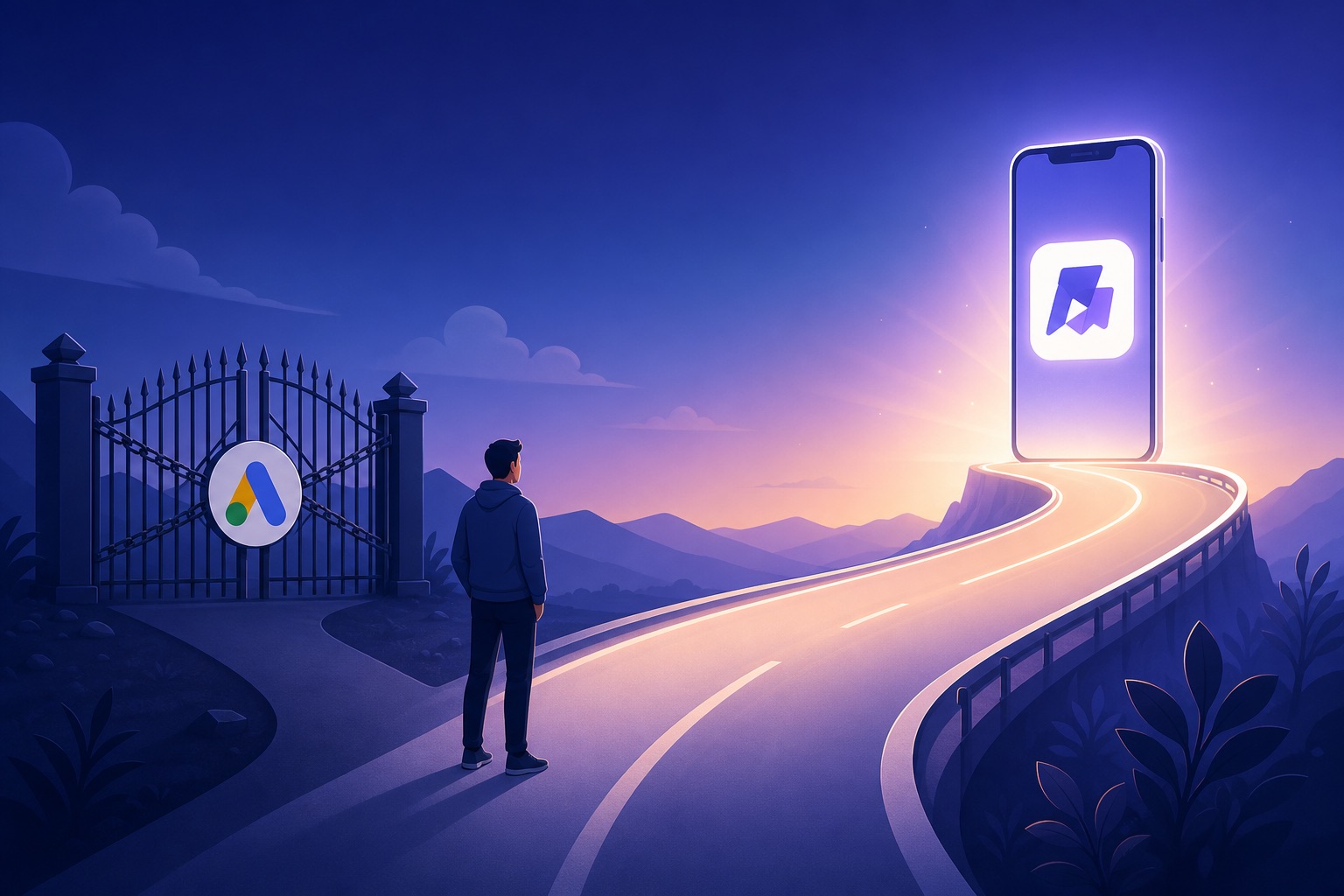
The law firm ban is a symptom. The underlying disease is platform concentration risk. If Meta is your primary acquisition channel and your app lives on Google Play, you have two single points of failure:
- Ad platform risk: Meta can change targeting rules, reject creatives, or suspend your account at any time. You have no contractual guarantee of continued access to their ad inventory.
- Distribution risk: Google Play can reject your app update, restrict your listing, or remove it entirely. Your entire install base depends on a review process you don’t control.
When both risks materialize simultaneously — which they increasingly do for AI social apps and gaming apps — your growth engine stops overnight.
The Google Ads + PWA Alternative: Platform-Independent Growth
Shifting install campaigns to Google Ads with PWA as the conversion endpoint eliminates both risks:
Step 1: Diversify ad spend to Google Ads. Google UAC and Performance Max campaigns offer comparable reach for app installs with a different risk profile. Google’s ad review is more predictable, and account-level enforcement is less aggressive than Meta’s current posture. Allocate 30-50% of your Meta budget to Google Ads as a starting hedge.
Step 2: Replace Google Play with PWA as your install endpoint. Instead of routing Google Ads traffic to Google Play (adding store friction), send it to a PWA install page. Users go from ad click to app-on-home-screen in under 5 seconds. Install conversion rates improve by 1.2x because there’s no store redirect, no download wait, no Play account requirement.
Step 3: Set up conversion tracking for PWA installs. Create web conversion events in Google Ads for “Add to Home Screen” completion. Use GA4 to track the full funnel from ad click to PWA install to in-app engagement. This gives you cleaner attribution than Google Play provides, because you control the entire conversion path.
Why This Matters for Gaming and AI App Teams
BC gaming teams face dual exposure: Meta’s Advantage+ automation is particularly unpredictable for gaming creatives (which often feature bold visual claims), and Google Play’s review process frequently flags games with aggressive monetization. PWA distribution removes the Google Play risk, and Google Ads diversifies the Meta risk.
AI social app teams (dating, companion apps) are among the most affected by Meta’s review tightening. These apps often trigger content policy reviews, creative rejections, and account-level scrutiny. A Google Ads + PWA combination means that even if Meta suspends your account, your distribution continues uninterrupted through a channel you control.
Action Checklist
- Audit Meta platform dependency: what percentage of installs come from Meta ads alone?
- Allocate 30-50% of Meta budget to Google Ads UAC/PMax campaigns
- Set up a PWA install landing page as your Google Ads destination
- Create web conversion events for PWA installs in Google Ads + GA4
- Run 30-day parallel comparison: Meta→Play vs Google Ads→PWA
- Build a contingency plan: if Meta suspends your account tomorrow, can you sustain growth?
Skip the app store. Go live instantly, keep 100% of your revenue.
ROiBest helps Android app teams launch PWAs — no review process, no 30% Google Play cut, and push notifications that work even after uninstall. Teams see up to 1.2x higher install conversion rates vs native app downloads.
发表回复